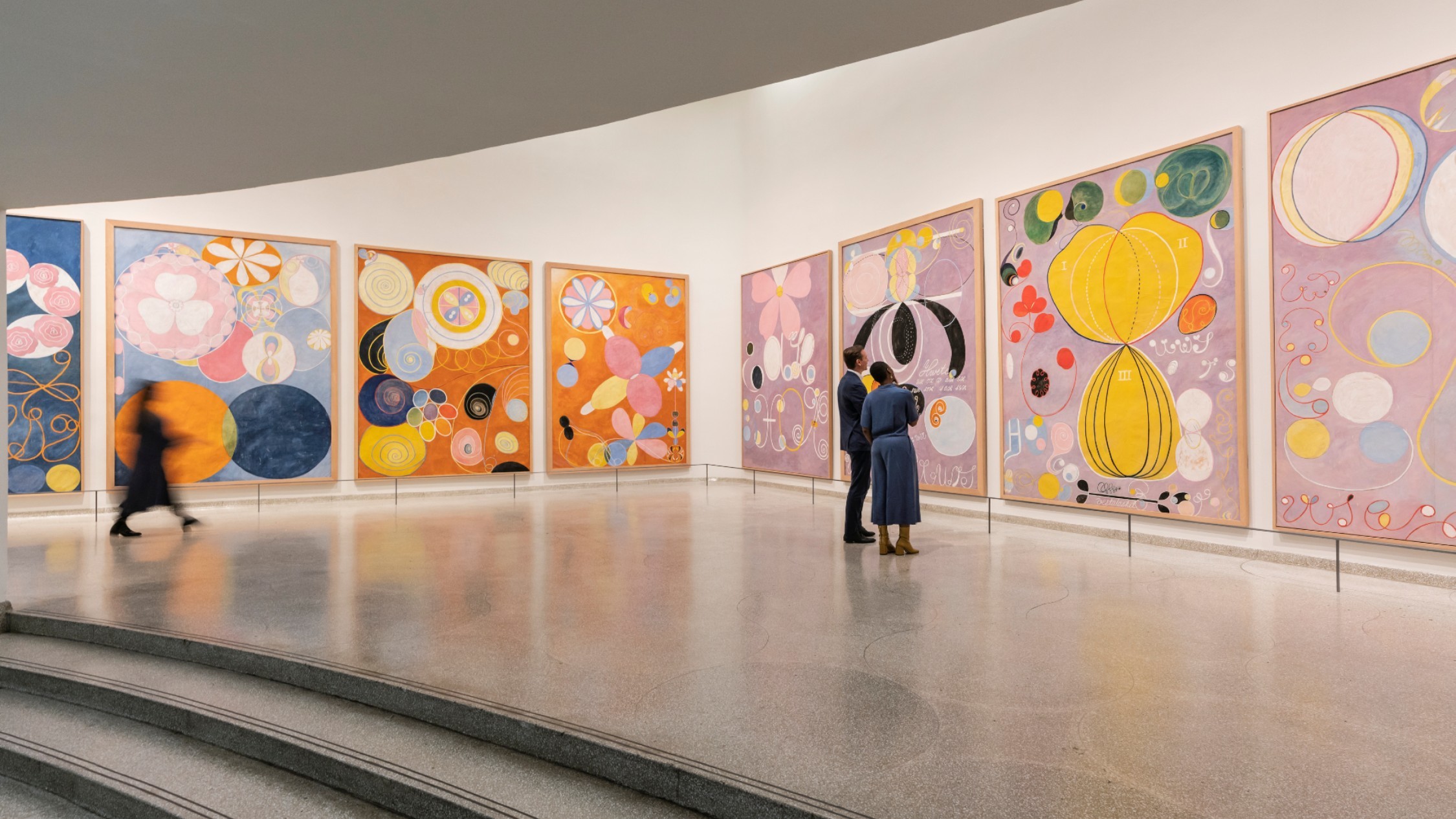
Hilma af Klint was a leading abstract artist and one of the most neglected figures of early twentieth-century art. Born in Sweden in 1862, af Klint pursued a successful career in her 20s as a portrait painter, but throughout her life, she was dedicated to creating abstract art. Her works span a range of techniques and styles and depict a range of subjects, but they are primarily focused on expressing her own views on the relation between the spiritual and material worlds.
Throughout her life, af Klint’s art was largely ignored by critics and viewers alike, with many of her works being left undiscovered until the onset of the 21st century. In recent years, af Klint’s works have gained wide recognition for their boldness and complexity, as she sought to expand the boundaries of abstract art.
Creative Influence and Contributions to the Art World
Hilma af Klint was a creative influence and made immense contributions to the art world in her lifetime. Growing up surrounded by both the spiritual side of Sweden’s Lutheran Church and the natural world, af Klint was highly influenced by symbolism and mysticism. Her works frequently addressed the spiritual, often exploring nature and the human soul through abstract compositions. Af Klint was also highly interested in philosophical and scientific questions, as her painting often reflect her views on the balance between faith and reason. Further, af Klint’s art was groundbreaking in its exploration of visual expression, as she combined colors, lines, and shapes in unconventional ways.
Af Klint’s works now stand as some of the most influential art of the early twentieth century, and her body of work has become a cornerstone of abstract art. As a pioneering artist, she helped form a new branch of modern art that transformed the art world’s way of thinking and would shape the future of the creative world.
Top Works of Hilma af Klint
The commission of her artwork was often inspired by spiritualism and the supernatural, which included esoteric topics such as the Kabbalah, Freemasonry, theosophy, and Rosicrucianism. Below is a list of some of the most influential works of Hilma af Klint, by order of their completion date:
The Ten Largest Series:
- D.S. The Ten Largest – 1906
In this series, af Klint depicted many of her abstract notions, using colors and shapes to express her deep understanding of a balanced universe. In total, she created 190 paintings and collages in this series.
- On the Theme of Life – 1907–1908
In this series, af Klint used abstract and misty-like imagery to explore the notion of eternal cycles and evolution. The series consists of 19 works, including a combination of oil paintings, drawings, and collages.
- Paintings For The Temple – 1908–1915
Arguably the most significant of all her works of art, this series contains 193 pieces. In each painting, she investigated the close topics of spirituality and nature. This series was completed in 1915 but was not publicly released until 1989.
- Paintings For The Temple The Series: Principles – 1915
In this series, af Klint focused on the principle of Creation itself, delving deep into topics such as the occult, metaphysics, and the interaction between sound and vibration with the cosmos. This series consists of 90 paintings, two of which were not recovered.
- H – 1919
This series consists of nine oil paintings and a number of drawings and was created in 1919. The word ‘H’ stands for ‘Hieros Gamos’, the Ancient Greek term for ‘sacred marriage’, and af Klint used this series to explore the spiritual forms of human existence.
- Recapitulation – 1920–1921
Af Klint’s Recapitulation series was inspired by her understanding of mathematics, the physical world, and creation. The works consist of paintings, collages, and drawings and demonstrate some of af Klint’s most innovative strategies in depicting abstract notions.
- Paintings For The Temple The Series: Possibilities – 1922–1923
This series consists of 42 oil paintings, as well as a few drawings, and symbolizes af Klint’s outlook of the future of humanity. The series was completed in 1923 and was publically published for the first time in 1998.
- The Paintings For The Ad – 1923
Consisting of just five oil paintings, this series was created in 1923. Af Klint used The Paintings For The Ad to explore the themes of breaking the chains that bind us, and the freedom and joy of being liberated.
- The Paintings For The Fifth Rosy Cross – 1924–1925
This series is probably one of the best examples of af Klint’s understanding of the relationship between the material andspiritual worlds, as she painted and drew a series of images that represented both aspects.
- The Paintings For The Sixth Rosy Cross – 1925–1926
The final series of paintings made in her lifetime, this final group of works focused on her exploration of the mysteries of the universe. Af Klint used a range of color and shape to express her interpretation of creation and the meaning of life.
Legacy of Hilma af Klint
Hilma af Klint left a legacy of her abstract vision and spirituality when she passed away in 1944. Although a majority of her works have been discovered over the past two decades, her earlier paintings and sketches remain largely unknown. In recent years, af Klint’s body of work has become renowned, and is increasingly appreciated for its originality, creativity and abstraction of reality.
Her work has also had a lasting impact on the contemporary art world, as her bold use of color, line, and shape have allowed for the development of an entirely new genre of modern art, known as Abstract Abstraction. As one of the most influential figures of early Modernism, af Klint’s works continue to inspire and influence many modern-day artists.
Hilma af Klint was one of the most influential and shocking figures in the history of modern art. Her works, spanning from 1906 to 1925, provided a unique and powerful view of the world that wasn’t seen in the art of her time. Af Klint’s art moved viewers to look at the world in a different light, allowed for the birth of a new genre of modern art and inspired many contemporary artists. Today, af Klint’s works stand as some of the most influential art of the early twentieth century, and her body of work has become a cornerstone of abstract art.