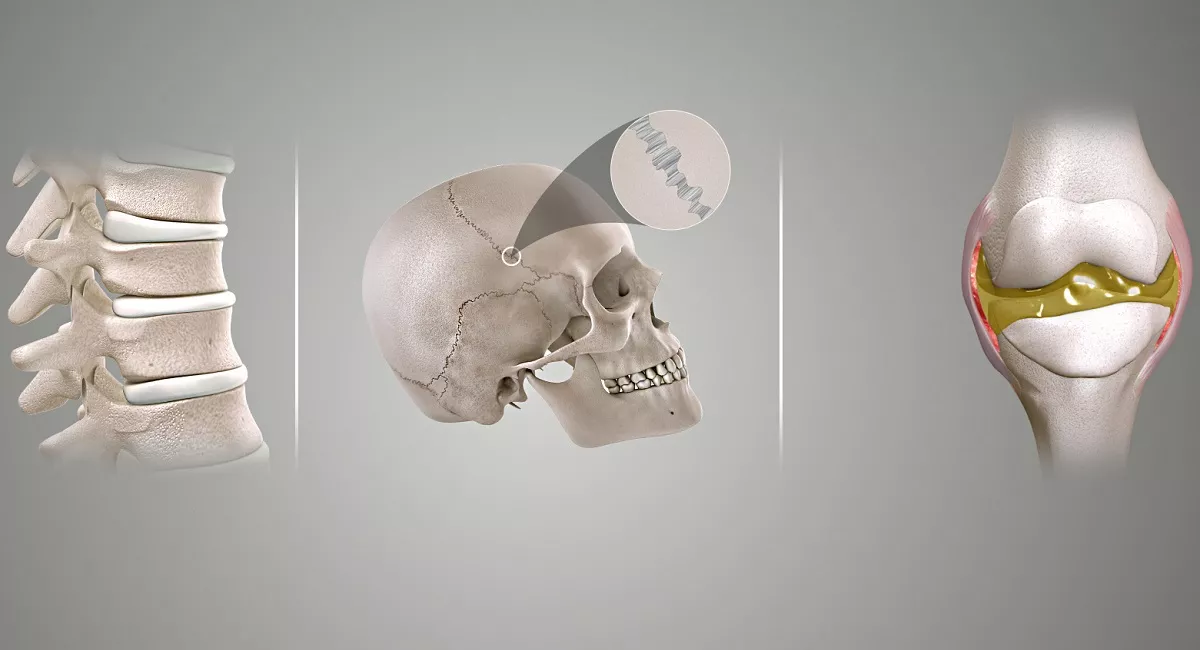
What Are Diarthrotic Joints?
Diarthrosis is the scientific terminology for the free-moving joints that enable human flexibility. A diarthrotic joint is one which permits a wide range of movement in multiple directions.Found throughout the human body, they provide a wide range of actions. The movement of joints is dependent on the type of joint and the specific surrounding structures.
Types of Diarthrotic Joints
The four types of diarthrotic joints are:
- Ball-and-Socket – Characterized by a round surface with a depression, they allow a wide range of movements in multiple directions at a single joint. Commonly found in the shoulder and hip.
- Hinge – Allows for back-and-forth motion around a single axis and are common in the elbow and knuckles.
- Pivot – Provides rotation around a single axis for side-to-side movement, like the neck and radius.
- Saddle – A combination of a ball-and-socket and hinge joint where the two surfaces fit together like a rider on a horse. Saddle joints are found in the thumb and wrist.
Main Features of Diarthrotic Joints
Diarthrotic joints are essential to movement and provide much needed flexibility to the body. Although each type of joint is different, they all have several features in common including:
-
Articulating Surfaces – This refers to the opposing surfaces that come together when the joint moves. They are covered in a layer of smooth, slippery cartilage which lubricates the joint and reduces friction.
-
Ligaments – These are the straps of fibrous connective tissue which join the articulating surfaces together. They create stability and balance by limiting the range of motion the joint can move in.
-
Synovial Fluid – This is the lubricating liquid which is located in the synovial cavity and helps to reduce friction between the joint surfaces.
-
Bursae – This is a sac that is filled with synovial fluid and is located between the joint and any nearby tendon or muscle. It helps to cushion the impact of movement and reduce wear and tear on the joint.
-
Joint Capsule – The joint capsule surrounds the entire joint and helps to keep the articular surfaces together. It is made up of collagen fibres and is covered with a lining of synovial membrane.
Benefits and Risks of Diarthrotic Joints
Despite being very important for movement, diarthrotic joints are also prone to injury. There are many benefits to having them but also risks associated with them.
Benefits
-
Provide Stability – The ligaments of the joint work to keep the articular surfaces together and provide stability.
-
Increased Mobility – The joint allows for a wide range of motion, making it easier for the body to perform various movements.
-
Variety of Restrictions – The ligaments, joint capsule, and bursae of the joint enable the body to move in specific ways, as well as limit the movements to certain areas.
Risks
-
Increased Risk of Injury – While they offer protection and stability, they are also prone to damage due to overuse, trauma, or everyday wear and tear.
-
Decreased Mobility – With age, the cartilage of the joint can become worn away and reduce the range of motion of the joint. Without intervention, this can result in a decrease of mobility.
-
Arthritis – Arthritis is an inflammation of the joints which can cause pain, swelling, and stiffness. It often affects diarthrotic joints as they are responsible for most of the body’s movement.
Factors That Can Affect Diarthrotic Joints
The lubrication of the joint itself, as well as the surrounding structures, can affect how well the joint performs. Other factors such as diet, lifestyle choices, genetics, and age can all play a role in how the joint performs.
-
Diet – Eating a balanced diet can offer many health benefits, including maintaining joint health. A healthy diet should consist of a variety of foods, such as fruits and vegetables, to provide the joints with the essential vitamins and minerals it needs.
-
Weight and Activity Level – Being overweight or having a sedentary lifestyle can both have adverse effects on the joints. Overweight individuals put extra pressure on the joint which can lead to premature wear and tear. Regular activity, however, can help maintain healthy joint function.
-
Genetics – Genetics can determine the likelihood of developing certain diseases or health conditions, including joint problems.
-
Age – As the body ages, the cartilage of the joints naturally wears away, making the joint less able to withstand stress and pressure. As a result, the range of motion will decrease and the likelihood of developing joint diseases is increased.
Diarthrotic joints are the joints found throughout the human body that enable movement and flexibility. There are four main types of these joints, each with distinct features and functions. They are composed of articular surfaces, ligaments, synovial fluid, bursae, and joint capsules. While diarthrotic joints can offer many benefits, such as increased stability and mobility, there are risks associated with them, such as increased risk of injury, decreased mobility, and arthritis. There are several factors that can affect the health of these joints including diet, weight, activity level, genetics, and age. It is important to keep them healthy in order to reduce the risks of injury and maintain flexibility.