How Do Scientists Know Atoms are Real?
Atoms are the building blocks of the universe, but how do scientists know they’re real? This article will explain how scientists use the principles of physics and chemistry in their investigations to prove the reality of atoms.
What are Atoms?
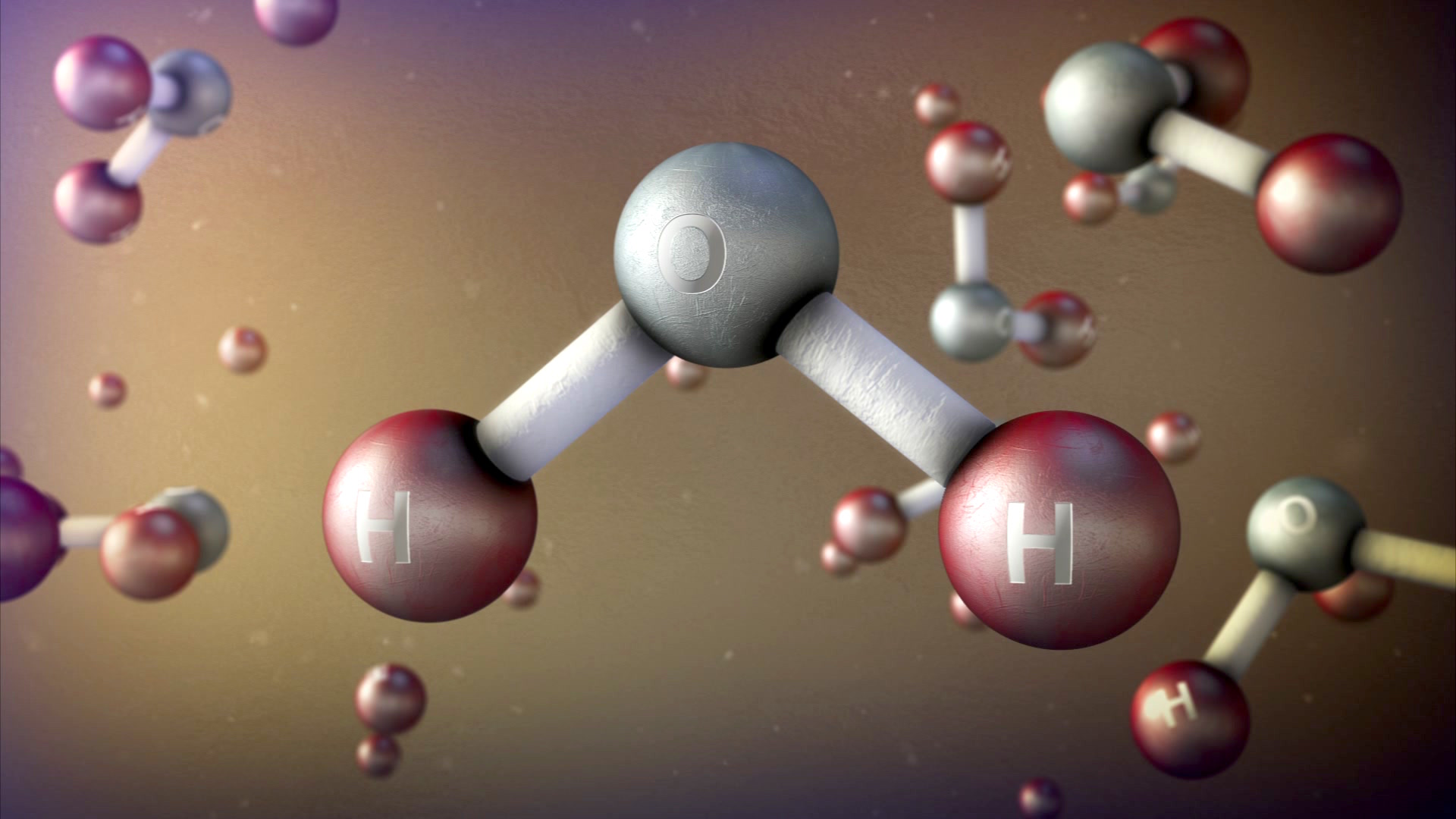
Before exploring how scientists prove the reality of atoms, it’s important to understand what atoms are. Atoms are the smallest building blocks of matter. They’re made up of protons, neutrons and electrons. These particles have different properties and interact with one another to form thousands of different chemical compounds. Atoms are constantly in motion and can combine to form larger structures, such as molecules.
History of Study of Atoms
The study of atoms dates back to ancient Greek philosophers, who developed the concept of the atom from their observations of nature. The belief in atoms was heavily tested by scientists for hundreds of years. However, it wasn’t until the 19th century that John Dalton advanced their theory with his Atomic Theory. Since then, atoms have been studied extensively in many fields such as physics, chemistry, and biology, as well as engineering and technology.
Evidence for the Existence of Atoms
To prove that atoms are real, scientists use a range of evidence in their investigations. Here are some common pieces of evidence they use to prove they are real.
Observations from Experiments:
The most common way to prove the existence of atoms is through experiments. Through experiments, scientists can observe the behavior of atoms and determine the properties of atom. This can be done through activities such as observation of collisions between atoms or the movement of different molecules.
Scattering Experiments:
Scientists also use the technique of scattering experiments to prove the existence of atoms. When particles collide, they scatter and can be observed. By studying the pattern of the scattering, scientists can measure the size of the particles and determine the structure of their atoms.
Particle Accelerators:
Particle accelerators are machines that accelerate particles near the speed of light. This allows scientists to observe the behavior of atoms in extreme conditions. This can provide insight into the properties of atoms and the forces that hold them together.
Analysis of Light:
The behavior of light can also be used to prove the existence of atoms. By analyzing the spectrum of light, scientists can determine the properties of atoms. This helps them to understand the structure of atoms and their interactions with other particles.
Atoms are the fundamental building blocks of matter, and scientists have used a range of evidence to prove their existence. They can use data from experiments, scattering patterns, particle accelerators, and analysis of light to determine the properties of atoms, and to prove that these are indeed real. With such evidence, it seems that atoms are indeed real, and that scientists have every reason to believe them to be so.