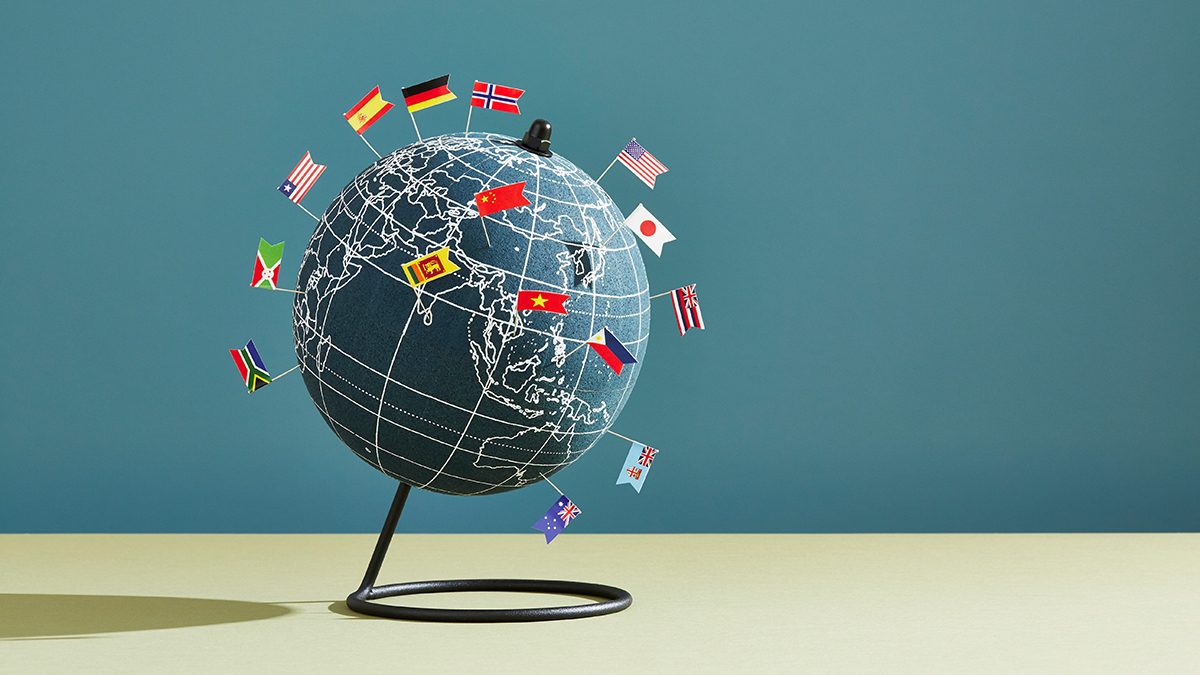
International trade is an integral part of our world’s economy and has been for ages. Governments, corporations, and individuals alike rely on this activity to acquire goods and services from around the globe. Such diverse interstate trade serves more than just the purpose of economic growth, it also serves to bring countries closer together. In this article, we will explore the ways different countries are interconnected through trade and the importance of such a connection.
What is International Trade?
International trade, also referred to as global trade, is the exchange of products or services among individuals or businesses that reside in two different countries. It is formed when buyers and sellers engage in packaging, distribution and delivery of goods and services across international borders. Trade can take place due to either the direct consent of the trading partners or through brokers who act as intermediaries.
Why Countries Trade
There are many reasons why countries engage in international trade. Chief among them is to satisfy the needs of their populations, to enable comparative advantage in production, and as a means of enlarging and diversifying their markets.
People need certain commodities that are not locally available, such as fish from Peru, coffee from Colombia, or electronics from China. Countries that produce these goods, sell them abroad to receive a currency exchange for the purchase, which can be used for goods and services.
Another motivation for international trading is the opportunity for individual companies operating in the same country to drastically extend their global presence and obtain access to new markets. Given that there are different rules and regulations, taxes, and other costs in different countries, companies may find it more economical to manufacture goods and services in one country and then sell them in other countries.
Economic theory suggests that countries, like companies, should pursue a specialization in the area of production, in which they have a comparative advantage. This specialization of goods and services allows it to be sold abroad, keeping the price of the goods down. Additionally, this initiative promotes foreign direct investment, which is an important engine of growth for the country’s economy.
Types of International Trade
International trade can be classified into two main types depending on the purpose of the transaction.
The first is B2B trade, also known as business-to-business trade. This kind of trading takes place between two parties, usually businesses, like wholesalers, suppliers, and distributors. It is facilitated through platforms like Alibaba, which provide a space for buyers and sellers to conduct transactions with each other.
The second type is B2C trade, also known as business-to-consumer trade. This is when an individual consumer buys a product or service from a merchant outside of their country. This kind of trade is often mediated through an intermediary platform such as Amazon or eBay. Commonly traded items include electronics, apparel, and toys.
Benefits of International Trade
Connecting countries through international trade has vast advantages, both culturally and economically.
The primary benefit of international trade is the increased access a country has to goods, services, and resources that it would not be able to obtain itself. This increased access can often lead to lower prices for consumers, as well as reduced production costs for businesses.
Beyond that, international trade also stimulates economic growth through the rising demand for locally produced goods and services. This high demand increases the output of businesses, which can lead to the opening of new businesses, the creation of more jobs, and an increase in the country’s GDP.
Interstate trade further contributes to economic growth through the exchange of knowledge, skills, and labor force. This means that businesses and individuals abroad can access the same innovative products and services as those produced in their own country.
In addition to its economic benefits, international trade also serves to foster cultural understanding and unity among nations. This exchange of goods and services among countries bridges gaps that would have previously existed among them and facilitates relationships on both a national and personal level.
Barriers to International Trade
Although there are numerous advantages to engaging in international trade, it is not without its challenges and barriers. The most common trade barriers are tariffs, quotas, subsidies, and regulatory requirements.
A tariff is a tax imposed by a government on imported goods. This tax increases the price of imported goods, making them less attractive to consumers. Quotas, on the other hand, directly limit the number of goods that can be imported into a given country. Subsidies are financial aid given to producers by the government, aimed at making certain domestic goods more competitive with foreign goods. Finally, regulatory requirements are regulations on imported goods, which can add financial burden on importers and make imported goods cost-prohibitive.
Given the complexity of international trade, many countries also impose restrictions on the flow of goods alongside the implementation of Trade Agreements. These agreements are binding documents between countries regarding different aspects of trade such as investments, services, intellectual property, market access, and dispute settlement.
Famous Trade Routes
Throughout history, there have been a number of important trade routes that have connected different countries and facilitated the exchange of goods and services. Here are some of the most famous trade routes in history that have helped shape the world’s economy.
The Silk route
The Silk Route is one of the most widely known trade routes in the world. Also known as the Silk Road, this network of overland and maritime trade routes began in China and extended to the Mediterranean and Black Seas. It served as a bridge between the East and West for centuries, connecting China, India, Persia, Syria, and Europe. Different goods were exchanged along this route, including silk, silver, spices, and porcelain.
The trans-Saharan route
The trans-Saharan route was an important set of trade routes that connected the African markets in the North and the West with those of the East and the South. It was the main trade route between sub-Saharan Africa and the Mediterranean region, and it became a major conduit through which goods including salt and gold moved in ancient and medieval times.
The Incense Route
The Incense Route was a set of trade routes connecting the Mediterranean area with India and the Far East, named for the trade of incense from Arabia and India. The main goods traded along this route included aromatics, spices, perfumes, and medicines. This route was active between 1400 BCE and the end of the middle ages.
International trade is an essential part of the world economy and a great way to bridge countries together. It allows countries to access goods, services, and resources they may not be able to get otherwise, while stimulating economic growth and fostering cultural understanding. Despite the challenges and barriers that such trading entails, countries have continued to be interconnected through a vast variety of trade routes, such as the Silk Route, the Trans-Saharan Route, and the Incense Route. Trade is sure to continue connecting different countries in the future and will continue to drive economic and cultural development.