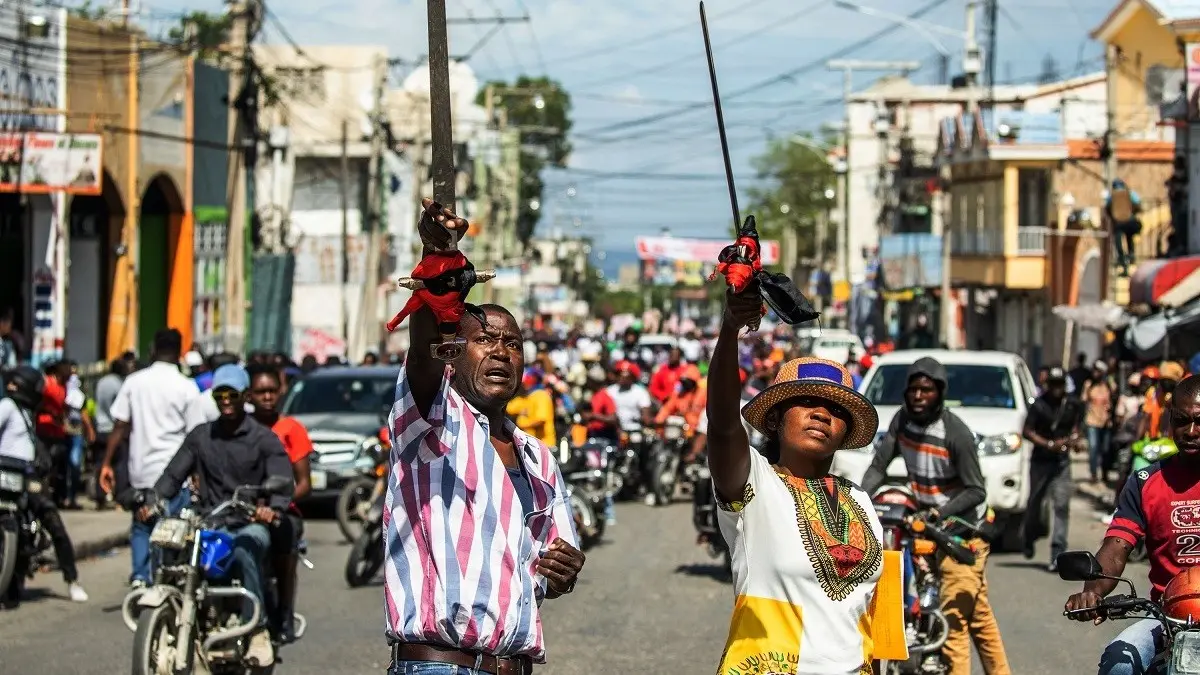
Haiti, the Caribbean’s poorest country, is facing an alarming increase in widespread gang violence due to a surge in illicit gun trafficking. Despite efforts to constrain gun circulation, the steep rise in Haiti’s gang violence can be attributed to the country’s unrestricted arms trade.
Background of Gun Trafficking in Haiti
Haiti has had few laws to regulating the use and possession of firearms since the 1987 constitution was adopted, leading to a rise in illegal gun trafficking. Traffickers have taken advantage of weak laws and brought in weapons that were smuggled in from overseas. Additionally, firearms have been stolen from local military and police units, exacerbating the illicit gun trade in Haiti.
In addition to an increase in smuggled guns, criminal gangs are using the ongoing civil unrest to further their illicit gun trade. Disruptions in Haiti’s economic and political climate have led to poverty, ethnic divisions, and inadequate public institutions. This provides the perfect environment for criminal organizations to engage in illegal arms trading activities.
Escalation of Gang Violence
The influx of illegal weapons has caused an explosive increase in gang-related violence. Criminals are now more well-armed and have access to more sophisticated weapons. As a result, they are able to commit more violent crimes and terrorize the local population with impunity.
The gang violence has spread to all corners of Haiti, devastating urban centers and rural areas alike. Approximately 40 percent of all young people have a gun or have access to one, and the number of people killed or injured by gun violence is on the rise.
Women and children are particularly at risk, and some of those who have been caught up in the violence have fled their homes in search of safety. The rampant gun violence has also led to a dramatic rise in abductions and gang-related kidnappings.
Shortcomings of Law Enforcement in Haiti
The Haitian government is ill-equipped to deal with the current epidemic of gang-related violence. The country’s police and military forces are weak and lack the capacity and resources to effectively combat gun trafficking. Furthermore, many of the police officers and military personnel are corrupt and take bribes to allow for illegal gun trading.
The lack of strict firearms laws has been exploited by criminals, and police officers lack the authority to properly enforce them. In addition, the country’s judicial system has been slow to respond to gun-related crimes, and some of the perpetrators have gone unpunished.
Due to these shortcomings, the Haitian government has been unable to take a firm stance against gun trafficking and gang violence. This has only exacerbated the situation, leading to an even greater level of violence and insecurity in the country.
International Intervention
International organizations such as the United Nations Office for West Africa (UNOWA) and the Organization of American States (OAS) have stepped in to help address the surge in gun trafficking and gang violence in Haiti.
They have helped to establish programs that focus on strengthening the rule of law, providing social and economic support, and improving access to education and health care.
In addition, the UN has called for a comprehensive set of security policies, including amending legislation to be in line with the Arms Trade Treaty and enacting laws that impose stringent regulations on the importation and possession of firearms.
The UN has also advocated for the disarmament, demobilization, and reintegration of former militia members, and they are also encouraging a range of initiatives aimed at mitigating and preventing future gang violence.
Haiti is facing an alarming increase in gang violence due to a surge in illegal gun trafficking. The country’s weak laws and the ongoing civil unrest have created an environment in which criminals are able to engage in illicit arms trading with impunity.
International organizations have stepped in to provide support, but the Haitian government must take action to properly address gun trafficking and gang violence. This includes amending legislation to be consistent with the Arms Trade Treaty, imposing strict regulations on the possession of firearms, and providing social and economic opportunities to disadvantaged populations. Without these necessary reforms, Haiti’s gang violence will continue to spiral out of control.