What Is a Reliquary? A Guide to the Origins, Purposes and Uses
Reliquaries are containers that are specially designed to house precious relics, or objects of spiritual or religious interest. These containers keep the relic or object safe from the elements and are widely used in religious ceremonies around the world. In this guide, we will provide an overview of reliquaries, including the history of their origin, main types, and uses.
History of Reliquaries
Reliquaries have a deep and meaningful history in both ancient and modern cultures. The word “reliquary” itself is derived from the Latin word “reliquiae,” which means “remains” or “something left behind.” However, there is evidence that the concept of reliquaries extends back even further to the early days of mankind, when cave dwellers were known to have made use of bones, stones and other physical reminders of their religious and spiritual beliefs.
It would be the ancient Egyptians who would be the first to make use of elaborately decorated boxes and containers to store sacred items, often associated with their gods. Initially, these “chests” were most commonly used to store mummified body parts, such as hands, feet, and heads. As time went on, the Egyptians began to use the vessels for coins, jewelry, and other household items.
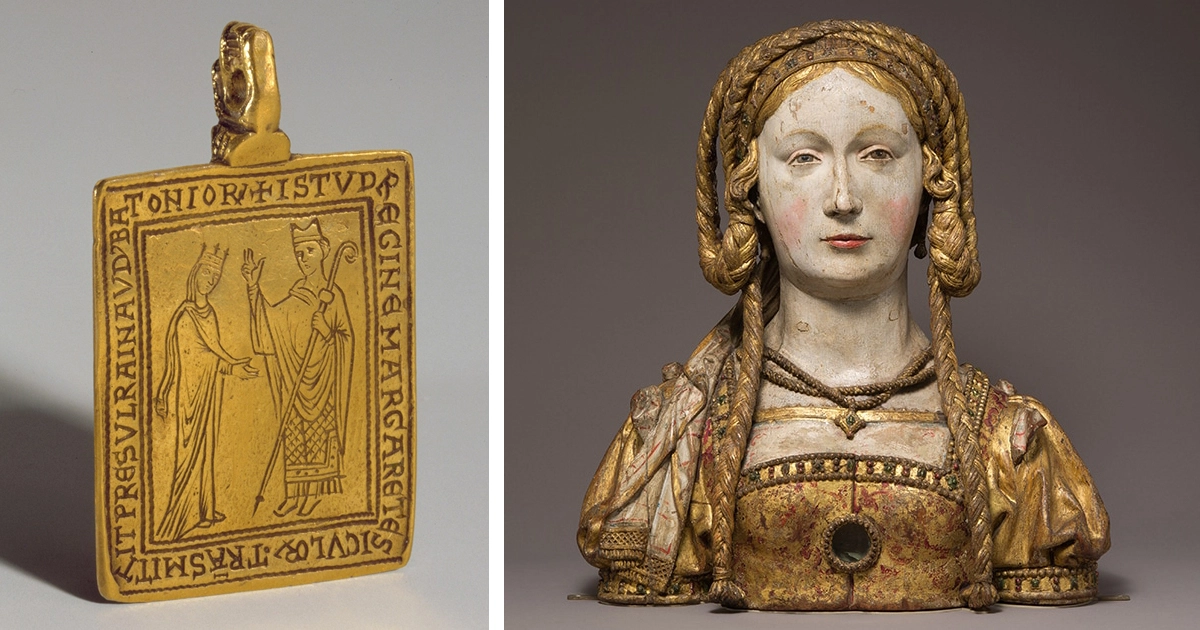
Relics of religious figures have been important sources of spiritual devotion in many cultures throughout time. During the Middle Ages, reliquaries were made with precious metals and adorned with luxurious gems. Some even featured intricate depictions of religious scenes and figures. These items became popularly used as vessels for storing bodily remains and other personal effects of Christian saints and religious figures.
Broadly speaking, reliquaries can come in many forms. While there is no one-size-fits-all answer to what a reliquary may look like, there are a few general designs which are most commonly seen:
Types of Reliquaries
Chalices and Pyxes
A chalice, often made of metal, is a vessel that has the shape of a cup and is used as a reliquary to hold the consecrated Eucharist. Many of these chalices feature horseshoe-shaped lids, and can be heavily decorated with symbols, images and symbols or inscribed with religious or spiritual meaning.
Pyxes are also unique containers that are used to hold the Eucharist. While similar in some aspects to a chalice, a pyx is smaller in size and has a flat, round lid that is often adored with symbols. In some Christian denominations, this type of reliquary is essential for taking the Eucharist to the sick and elderly.
Ciborium
The ciborium is a vessel that is used exclusively for bringing the Eucharist to the church and is often used during the communion service. It is a tall, cylindrical vessel with an ornate lid, usually crafted from gold, silver or brass.
Monstrance
The monstrance, or ostensorium, is a highly ornate vessel that is specifically designed to hold the consecrated host. This object is usually made of gold, silver or brass and features intricate designs on each face. Monstrances usually feature a crystal of some kind which acts as a window through which followers can see the sacred object.
Reliquaries in Use
Reliquaries are now widely used throughout the world in religious ceremonies, typically to contain holy relics or sacred objects. In the Catholic tradition, for example, these vessels can often be seen in churches, being carried in processions or set up in a designated place for veneration or prayer.
Reliquaries are also commonly found in other places of worship, as well as in homes and other places of devotion. Depending on the person and their religious or spiritual beliefs, a reliquary can serve a variety of purposes. It can be used as a tool for veneration, a reminder of a loved one, a symbol of one’s faith, or even a source of protection or hope. Regardless of how it is used, a reliquary is a powerful object with a long and meaningful history.
Reliquaries are ornate containers with a history that spans centuries. Used in religious ceremonies and other settings, these vessels can contain items of spiritual or religious significance, offering protection and security. Reliquaries come in a variety of styles, from chalices and pyxes to monstrances and ciboriums. These vessels have deep roots in both ancient and modern cultures, and are often associated with faith, devotion and remembrance.