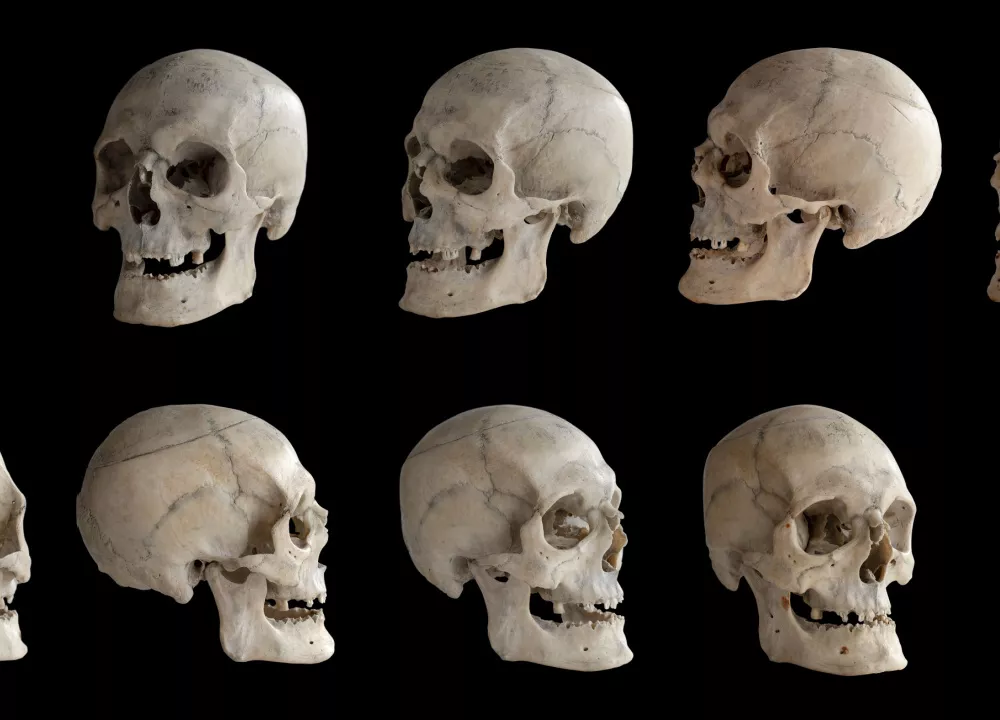
Skull Landmarks
Skull landmarks, also known as craniometrical points, are reference points on the skull used in scientific research and in the field of anatomy. These are important points used by anatomists, anthropologists, and scientists to identify and analyze characteristics of the skull. They are primarily used in medical studies—such as skull trauma, pathology, and plastic surgery—as well as in facial and skeletal reconstruction. This article provides an overview of the different types of skull landmarks, and how they are used.
Definition of Skull Landmarks
Skull landmarks are reference points and anatomic features used to determine and identify the various parts of the skull—such as the cranial vault, the anterior skull, and the face. They are used to compare and contrast different skull shapes and sizes, as well as for identification in forensic investigations. The nasion is a craniometric point located at the midpoint between the inner canthi of the eyes, and is the most common landmark used. Other common skull landmarks are the frenulum of the upper lip, the auricular points, and the mastoid processes.
Uses of Skull Landmarks
Skull landmarks are widely used in many different fields, including:
Medical research: Skull landmarks are used in medical research studies for a variety of purposes, such as identifying and analyzing the characteristics of the skull in cases of trauma, pathology, and plastic surgery.
Forensics: Skull landmarks are often used in forensic investigations to help identify deceased individuals. By comparing the skull landmarks of an unknown decedent to those of a known individual, forensic experts can determine if they are the same person or not.
Anthropology: Skull landmarks are also used in anthropology to analyze the variations in the human skull from one population group to another. This type of research can be used to analyze evolutionary adaptations and the migration patterns of ancient populations.
Facial Reconstruction: Skull landmarks are used in facial reconstruction to create a three-dimensional, computer-generated image of a person’s face based on the features of their skull. This process is useful in criminal investigations and can help with the identification of individuals.
Types of Skull Landmarks
There are many skull landmarks that are used in anthropological, medical and forensic research. Here are some of the most common skull landmarks:
Nasion: The nasion is the craniometric point located at the midpoint between the inner canthi of the eyes.
Frenulum: The frenulum of the upper lip, located in between the nostril and upper lip, is often used as a reference point.
Auricular Points: The auricular points are two points located at the base of the ear, at the front and back edges.
Supraorbital Notch: The supraorbital notch, located at the top of the eye socket, is also often used as a reference point.
Mastoid Process: The mastoid process is a bony projection located behind the ear.
Styloid Process: The styloid process is a bony process located close to the base of the ear and is used as a reference point.
Skull landmarks are important reference points used in medical research, forensic investigations and anthropology. They are used to compare and contrast different shapes and sizes of the skull, as well as to identify individuals. This article has provided a brief overview of the different types of skull landmarks and how they are used.