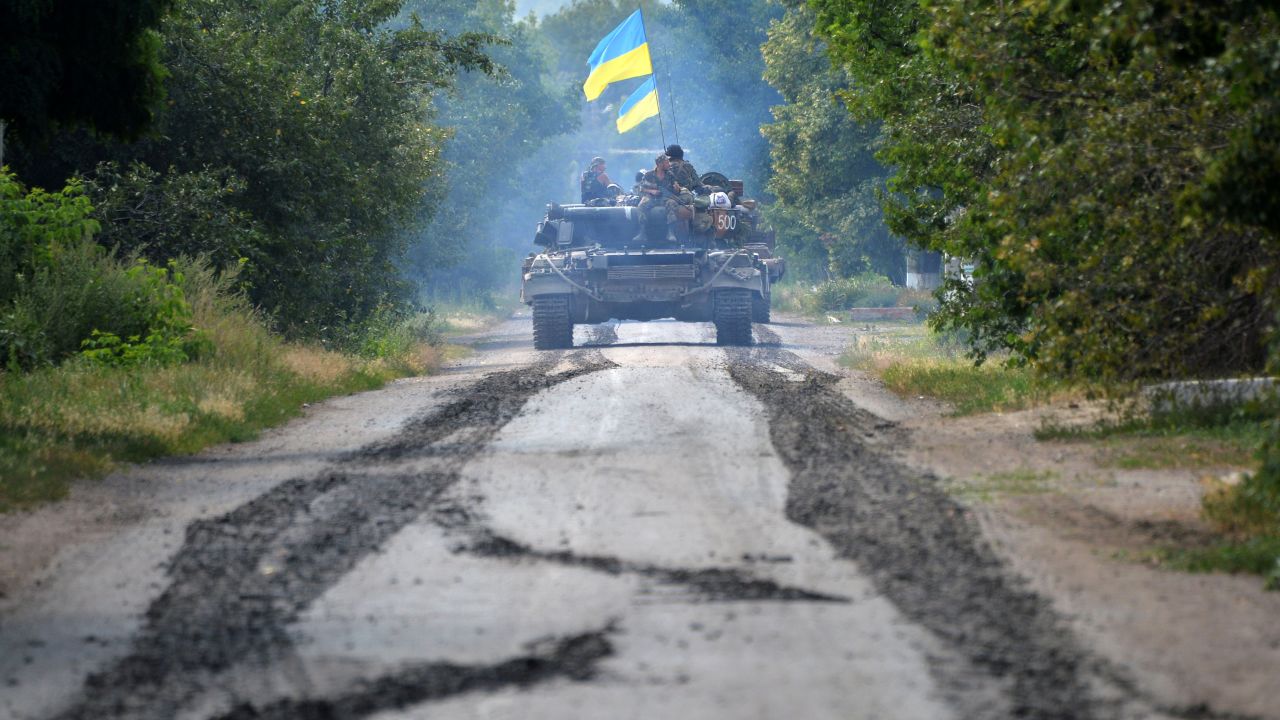
Ukraine Smolders as Europe Comes Slowly Awake
As much of the world shudders its way through the COVID-19 pandemic, Ukraine’s struggles with Russia-backed separatists in the east of the country smolder on, even as the country slowly moves towards incorporation into the European Union. On the horizon lies the promise of improved economic and political stability, but there are still many obstacles in the way of the country’s hopes and dreams.
Background and Context
The modern history of Ukraine begins with the breakup of the Soviet Union in 1991, at which point the formerly Soviet state declared its independence. Ukrainians have struggled with a variety of challenges since then, both internally and externally. As the world’s largest country by area, threats to Ukraine’s sovereignty are taken very seriously by the government and by its citizens.
Domestically, Ukraine has been plagued by corruption and a lack of economic direction in recent years. In the early 1990s, the economy underwent a difficult transition from USSR-style communist planning to a more market-oriented system. This resulted in a series of economic crises, followed by hyperinflation, before finally stabilizing into a more consistent growth path. In addition, the country has struggled with political divisions and a referendum held in 2014 overwhelmingly supported the idea of greater decentralization and further integration with the European Union.
External factors have also played a role in Ukraine’s predicament. In 2014, the country’s previous president, Viktor Yanukovych, was deposed, and this, combined with a popular desire to join the EU, led to a pro-Russian element in the population to resist the transition. After the annexation of Crimea by Russia in the same year, pro-Russian separatists began to fight the Ukrainian government in the east of the country—a conflict that is still ongoing.
The Conflict in Eastern Ukraine
The conflict in eastern Ukraine is a complex one and is ongoing despite the terms of the Minsk Protocol signed in 2015. The government in Kiev is currently in control of most of the country, but there are separatist forces in parts of the Donetsk and Luhansk provinces, located in eastern Ukraine, who are supported and armed by Russia.
This conflict has caused significant displacement of the local population, with millions having been forced to flee in search of safety, food, and medical care.
Meanwhile, the negotiation process has been largely at a standstill as Russia has continuously refused to comply with the terms of the Minsk agreement, which calls for a cease-fire, the withdrawal of foreign troops and the Ukrainian army, and the establishment of border control points.
The Impact of the Conflict
The effects of the conflict in Ukraine have been far-reaching. In addition to the number of casualties—an estimated 13,000 adults and children have so far been killed—the economic effects of the conflict have been devastating. Eastern Ukraine, especially the Donbas region where the fighting is most intense, has been hit hard. Businesses have been compelled to move or close, and vital infrastructure has been destroyed, leading to a sharp drop in living standards for the local population.
This economic effect has been compounded by the subsequent Russian sanctions placed on Ukrainian goods and services, which have limited exports to the EU, further damaging the economic prospects of the country.
European Initiatives
In spite of these challenges, there is a sense of optimism in Ukraine that EU-led initiatives to bring stability to the country are starting to bear fruit.
The EU has been sending aid to Ukraine since 2014, including financial assistance and technical advice to help the government reform its state institutions and upgrade its infrastructure. The EU has also been actively involved in the diplomatic process, leading negotiations between Ukraine and Russia.
There are several initiatives designed to bring the government in Kiev and the separatist forces in eastern Ukraine together. Some of the most promising initiatives include:
• The Normandy Format – A diplomatic process between Ukraine, Russia, France and Germany which aims to reduce tensions and bring both sides of the conflict together.
• The United Nations Peacekeeping Mission in Ukraine – This mission aims to ensure the implementation of the Minsk Protocol and to provide monitors to oversee implementation of the agreements reached.
• The OSCE Special Monitoring Mission – An international monitoring mission to observe the situation in Ukraine and report to the OSCE Permanent Council.
The Impact on the European Union
Ukraine’s integration into the EU has the potential to bring a number of economic benefits to the bloc. The country has immense economic and agricultural potential, as well as well-educated and relatively low-cost labor force. In addition, advances in energy technology and the availability of shale gas reserves could also bring an additional boon to the EU.
However, the conflict in Ukraine continues to be a serious concern for the bloc. Not only does the continued presence of Russian-backed separatist forces threaten Ukraine’s stability, but it also raises fears of further interference in the internal affairs of European states. It is, therefore, important for the EU to continue to prioritize Ukraine and find ways to bring the conflict to an end.
Ukraine continues to smolder at its own peril while the rest of Europe slowly awakens to a post-COVID-19 world. Ukraine’s long-term prospects remain unclear as the country is embroiled in a difficult conflict with Russian-backed separatists in the east and has to negotiate a complicated process of EU accession.
However, there are glimmers of hope. Aid from the EU and international humanitarian organizations has been helping to support the country’s economic recovery and reforms, while several initiatives are in the works to bridge the divisions between the government in Kiev and pro-Russian forces in the east.
With stability and peace within Ukraine and in the wider region, the nation’s immense economic and agricultural potentials could be realized, allowing Ukraine to eventually become a fully integrated part of the European Union.