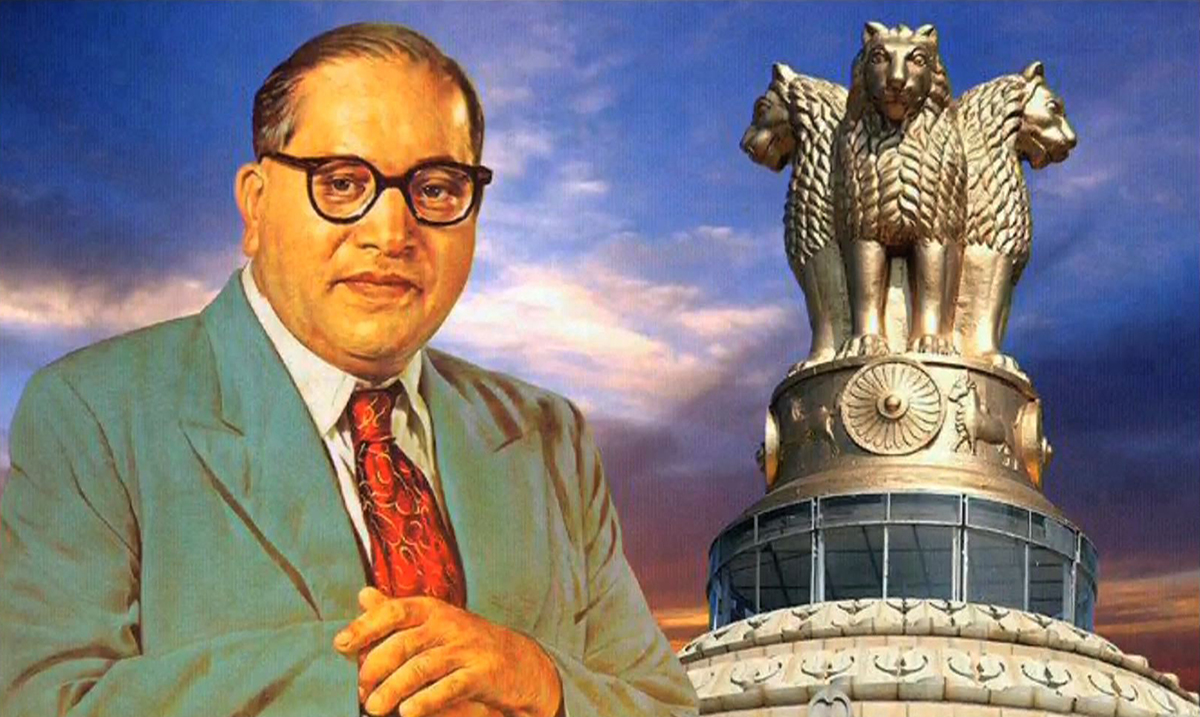
Dr. Bhimrao Ramji Ambedkar, or B. R. Ambedkar, has established himself as one of India’s most influential and beloved freedom fighters, intellectuals, economists, and social reformers. Ambedkar was a fierce champion of caste and gender equality, who saw the establishment of a ‘casteless’ society as an integral part of India’s social transformation.
He is also renowned for his highly critical stances on Hinduism and its societal and religious implications. Ambedkar’s critique of Hinduism resonates today for those who strive for social equality and justice in India. This article will examine Ambedkar’s thought on Hinduism and the social ills it creates.
Brief Background of B. R. Ambedkar
B. R. Ambedkar was born into a family of Dalits, or “Untouchables” in India. He was born into a society where Dalits were subjected to relentless and inhumane social and economic discrimination, based on their caste alone. Despite the extreme adversity he faced as a result of his caste, Ambedkar was highly educated. He received a scholarship to study abroad in the United States and England and returned to India in 1923. He went on to become a meaningful actor in India’s struggle for independence, the establishment of the Republic of India, and the drafting of India’s Constitution.
Ambedkar’s Critique of Hinduism
B. R. Ambedkar became a staunch critic of the Hindu religion and its associated inequality. Ambedkar saw Hinduism as the major factor in keeping the caste system alive and creating a major impediment to social emancipation. In several of his works, Ambedkar attempted to understand the relationship between caste and Hinduism, and how the two contributed to societal discrimination.
Caste System in Hinduism
The caste system is an ancient way of organizing India’s social hierarchy, and along with it, an oppressive practice of assigning jobs to individuals based on their level of privilege or perceived level of purity. Ambedkar argued that Hinduism was the source of this discrimination, because it taught that being born into a certain caste was one’s assigned fate, and that different castes were justified by Hindu religious texts.
Hinduism as a Religion of Inequality
Ambedkar was harsh in his criticism of Hinduism and its perpetuation of inequality. He argued that Hinduism was a religion defined by discrimination, because of its refusal to recognize the creation of an equal society and the need for social reform. In the book Annihilation of Caste, Ambedkar wrote:
Ambedkar's Critique of the Caste System
B. R. Ambedkar was greatly concerned by the implications of the caste system and sought to abolish the practice of assigning people to castes based on their birth. He argued that this perpetuated a system of inequality and a culture of discrimination in India. Ambedkar harshly criticized those who clung to the caste system, instead of actively seeking its abolishment, even if indirectly by changing their attitudes and practices. He offered some solutions as to how the system could be abolished, such as placing importance on individual merit and rejecting all conceptions of caste.
Ambedkar’s Reforms for Social Equality
Ambedkar was a committed reformer, who saw equality and justice for all individuals as essential for India and its people. He proposed numerous reforms to ensure social equality, including the establishment of Social Equality Zones (SEZs) to reduce the impunity of caste-based discrimination. He also sought to reform the untouchability laws and the unequal enforcement of judicial sentences. Furthermore, he proposed a number of programs aimed at improving the rights of Dalits and other minority communities.
Dalit Liberation Movements and Their Legacy
Ambedkar’s work may have been interrupted by his death in 1956, but his legacy continued to live on in India’s Dalit liberation movements. Among the notable contributions of these movements were the establishment of the All India Anti-Untouchability Committee in 1948 and the Ambedkar-inspired Civil Rights Movement led by Dr. P.T. Rajan in 1964. These liberation movements sought to educate Dalit communities about their rights, advocate for their fair treatment, and confront discrimination in all areas of life.
B. R. Ambedkar’s critique of Hinduism and his work towards social equality are integral to understanding India’s fight for justice. Ambedkar’s writings had a lasting impact on India’s social reforms and continue to function as a touchstone for contemporary scholars who seek to create a more equal society for all. His legacy lives on in the various liberation movements that draw on his thoughts and seek an end to caste-based discrimination and social injustice.